Chopsticks are the quintessential symbol of Chinese culture, standing out uniquely among tableware around the world and praised by Westerners as “Eastern civilization in the palm of your hand.”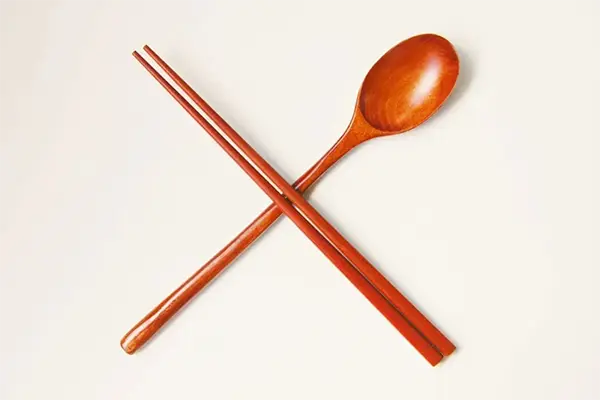
As an eating utensil, chopsticks are much more than a tool—they are a profound cultural carrier deeply intertwined with Chinese etiquette, marriage customs, beliefs, and art.
1. The Historical Origins of Chopsticks
Originally, chopsticks were not called “筷” (Kuài), but were referred to as “箸” (Zhù). The modern name Kuài did not emerge until the Song Dynasty and became mainstream during the Ming and Qing Dynasties.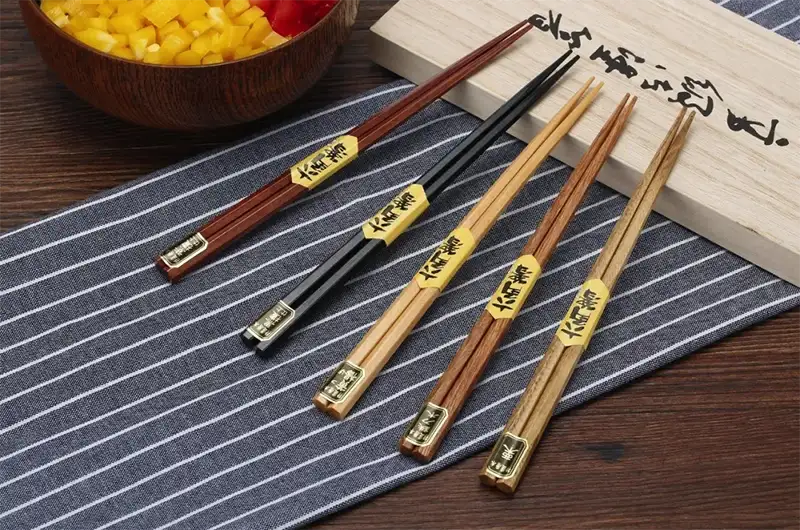
Because the pronunciation of Zhù sounds similar to “驻” (Zhù, meaning to stop or anchor) in southern dialects, boatmen and fishermen who relied on river transport considered it a bad omen. They wanted their boats to travel fast and never get stuck or delayed, so they avoided using the word Zhù. Instead, they began calling them Kuài (meaning quick). Later, since most chopsticks were made of bamboo, the Chinese character for bamboo (竹) was added to the top of the “quick” character (快), creating the modern character “筷”.
There are also three popular folk legends regarding their invention:
- Legend 1 (Jiang Ziya): Jiang Ziya was guided by a divine bird to use two thin bamboo twigs to pick up meat, which helped him discover that his wife was trying to poison him. From then on, he used bamboo sticks for every meal, and neighbors soon followed suit.
- Legend 2 (Daji and King Zhou): King Zhou of the Shang Dynasty was notoriously temperamental. Once, his concubine Daji found that the dishes were too hot to eat by hand, but there was no time to change them. To please the king, she pulled the jade hairpins from her hair to pick up the food, giving rise to the earliest form of chopsticks.
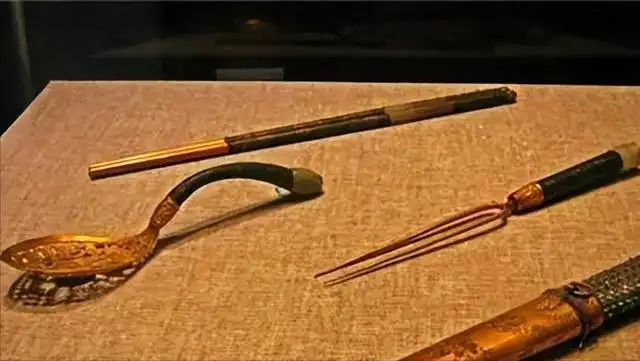
- Legend 3 (Yu the Great): During his legendary flood control efforts, Yu the Great was in such a rush that he used two tree twigs to fish hot meat out of his soup, leading his followers to adopt the same method.
2. Proper Usage and Etiquette
Using chopsticks in daily life involves strict traditional etiquette: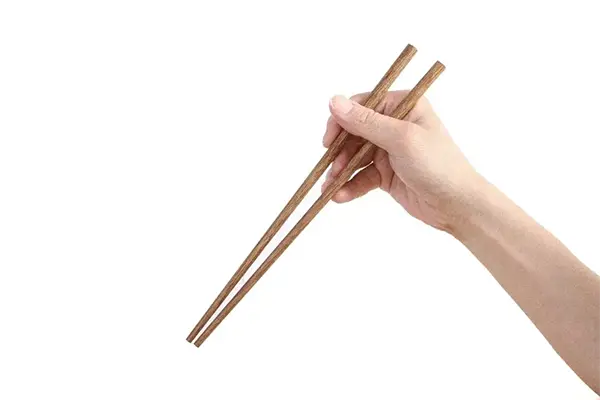
- The Grip: Hold the upper part of the chopsticks with your thumb and index finger of your right hand, while the other three fingers naturally bend to support them. The tips must be neatly aligned, symbolizing the traditional Chinese philosophy of the unity of Heaven, Earth, and Man (天地人).
- Placement: Before a meal, chopsticks must be neatly placed on the right side of the rice bowl. After the meal, they should be laid vertically and neatly across the center of the bowl.
3. Beautiful Symbolism and Gift Meanings
Chopsticks embody many auspicious meanings:
- Design: Their standard length of seven cun and six fen (approx. 22–25 cm) represents human emotions and desires (seven emotions and six senses), distinguishing humans from animals. One end is square (representing Earth) and the other is round (representing Heaven), reflecting the concept of Tian Yuan Di Fang (Heaven is round, Earth is square). Using the round end to feed oneself signifies that “food is the people’s heaven.”
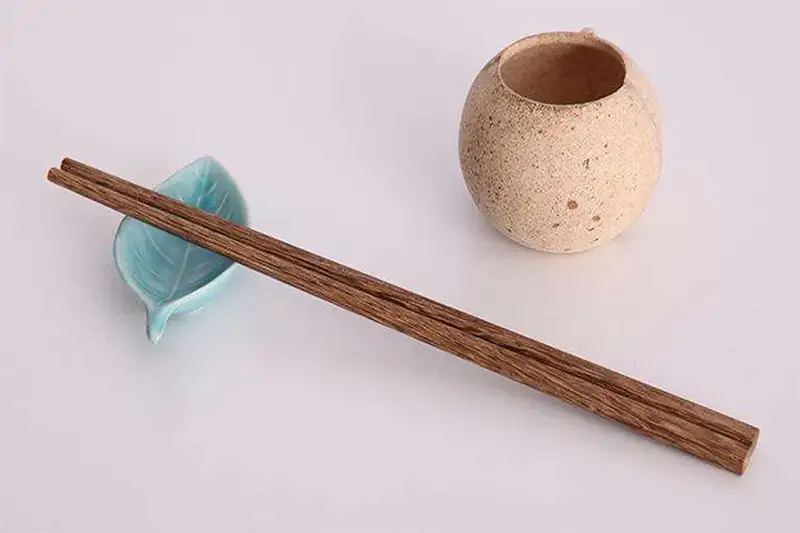
- Yin and Yang: Chopsticks are a pair—one cannot function without the other. One is active (Yang), and the other is passive (Yin); one is on top, and the other is below. Their perfect cooperation represents balance.
Gift Meanings:
- To someone moving into a new home: Wishing them a prosperous and happy new home.
- To business partners: Signifying sincere cooperation without vying for personal credit.
- To good friends: Representing harmony, mutual support, and sharing hardships together.
- To children: Expressing the wish for them to grow up fast and healthy.
- To the elderly: Wishing them longevity, health, and boundless happiness.
- To newlyweds: Blessing them to stay happily married as a couple and have children soon.
4. Taboos at the Dining Table
- Unmatched Lengths (San Chang Liang Duan): Placing chopsticks of uneven lengths on the table is considered extremely inauspicious, symbolizing “death or shortcomings.”
- Sticking Upright (Gong Kuai): Never stick chopsticks vertically upright into a bowl of rice or food, as this is exclusively done during ancestral offerings or rituals for the dead.
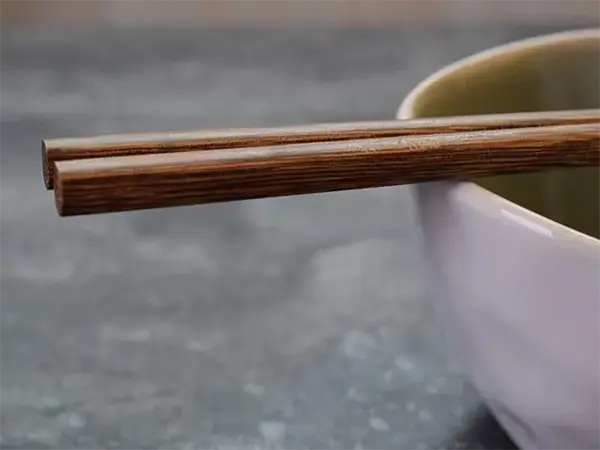
- Pointing at Others: Never point at fellow diners with your chopsticks while talking or drinking, as it is considered rude and akin to scolding or reprimanding them.
- Crossing Chopsticks: Leaving chopsticks crossed on the table is a taboo, viewed as a total rejection of everyone at the table.
- Hesitating (Mi Kuai): Wandering aimlessly with chopsticks without deciding which dish or piece of food to pick up shows poor table manners.
Related Recipes You Might Enjoy
To complete your culinary journey, try pairing these cultural insights with our home-style recipes:
- Check out our quick and crispy 15-Minute Garlic Butter Chicken Wings or classic Spicy & Tangy Shredded Potato Salad.